
 English
 Español
 Portugues
 Pусский
 Français
 Deutsch
 日本語
日本語 한국어
한국어 العربية
 Italiano
 Nederlands
 Svenska
 Polski
 ไทย
ไทย Türk dili
 Indonesia
 Tiếng Việt
 Română
 Suomalainen

When I work on precision parts for automated equipment, I always look at the complete motion system rather than treating one component as an isolated part. A shaft may look simple from the outside, but a small change in its center position, diameter, length, or working surface can change how the whole machine moves. This is especially true for semiconductor and chip packaging equipment, where repeated movements need to be controlled carefully.
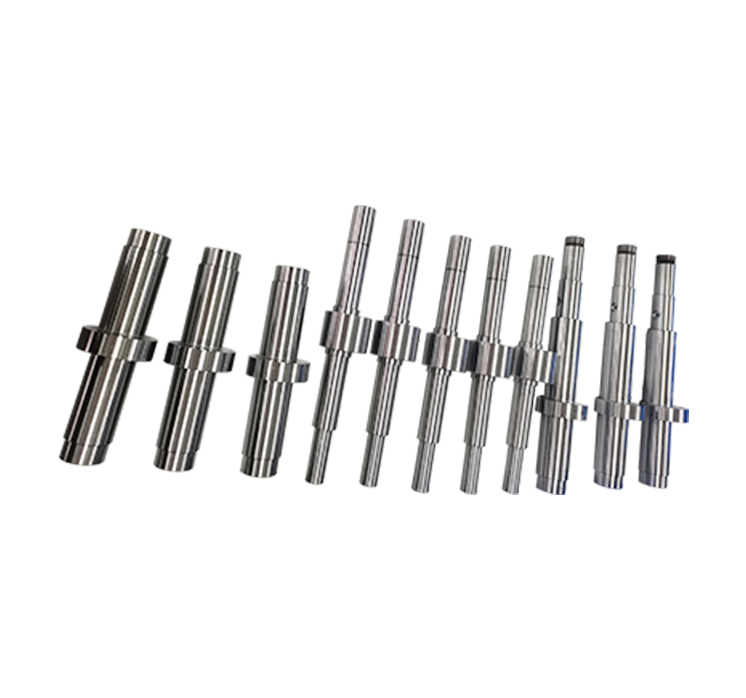
Our Custom Eccentric Shaft for Chip Packaging Equipment is manufactured according to the actual mechanical requirements of the equipment. Depending on the design, the shaft can be used with bearings, connecting rods, sliders, rotating plates, vacuum handling mechanisms, pressing mechanisms, or other motion assemblies. The eccentric section provides an offset from the main rotational center, allowing rotary motion to be converted into controlled mechanical movement.
At Dongguan Jifan Precision Machinery Co., Ltd., we specialize in Custom Cam Machining, Cam Mechanisms, eccentric shafts, crankshafts, plate Cams, conjugate cams, Profile Grinding, and other precision mechanical components. We manufacture parts according to customer drawings, specifications, samples, and equipment requirements rather than forcing a standard part into a non-standard machine.
In this article, I will explain what a custom eccentric shaft does, how it can work inside chip packaging equipment, which dimensions matter, how we manufacture and inspect the component, and what you should prepare before asking for a quotation.
1. What Is a Custom Eccentric Shaft for Chip Packaging Equipment?
An eccentric shaft is a rotating mechanical component with one or more working sections positioned away from the main shaft centerline. This offset is called eccentricity. When the shaft rotates, the eccentric section moves around the main shaft center, creating a controlled offset movement.
The principle is quite easy to understand. Imagine a small pin mounted slightly away from the center of a rotating disk. When the disk turns, the pin moves around the center instead of simply spinning in one fixed position. If a connecting component is attached to that pin, the circular movement can be converted into a back-and-forth or up-and-down movement.
This basic mechanical idea can be useful in automated semiconductor equipment. A published patent for a chip packaging device describes an eccentric shaft transmission mechanism used to move a vacuum suction head in the vertical direction. The mechanism uses a motor, rotary table, eccentric shaft, and connecting component to create the required movement.
This is a good example of why an eccentric shaft should be designed around the equipment. The shaft is not working alone. It is part of a motion chain that may include a motor, bearing, connecting piece, guide, suction head, fixture, or other mechanical elements.
In our work, a custom eccentric shaft for chip packaging equipment can be produced according to the customer's mechanical drawing or application requirements. The shaft may include eccentric sections, bearing seats, shoulders, grooves, keyways, threaded sections, mounting holes, or other customized features.
Why Is the Eccentric Section Important?
The eccentric section controls how far the connected mechanism moves away from its normal centerline. If the eccentricity is changed, the movement of the connected part also changes. That is why eccentric distance is usually a critical dimension.
However, I would not recommend choosing eccentricity based on one number alone. The required movement depends on the complete mechanism. The connecting rod length, mounting position, guide arrangement, bearing position, machine stroke, and operating cycle can all affect the final motion.
For this reason, when a customer asks us for a precision eccentric shaft for semiconductor equipment, I prefer to see the relevant assembly drawing whenever possible. A shaft drawing tells us what to manufacture, while an assembly drawing can tell us why those dimensions matter.
Where Can It Be Used?
Depending on the machine structure, a custom eccentric shaft may be used in die attach equipment, chip handling systems, packaging presses, molding equipment, loading and unloading mechanisms, positioning systems, inspection equipment, and other automated semiconductor production machinery.
Semiconductor back-end manufacturing includes processes such as dicing, die attach, bonding, encapsulation, and testing. These processes use different types of equipment and mechanical systems.
I do not assume that every packaging machine uses an eccentric shaft. The actual mechanism depends on the equipment designer's motion requirements. Our job is to manufacture the shaft when an eccentric mechanism is part of that design.
2. How Does an Eccentric Shaft Work in Chip Packaging Equipment?
The easiest way to understand an eccentric shaft is to follow the movement from the motor to the final working component.
First, a motor provides rotary motion. That rotation is transferred to the eccentric shaft. Because the working center of the eccentric section is offset from the main shaft centerline, the eccentric section follows an offset circular path.
A bearing, connecting rod, sliding block, or another mechanical component can follow this movement. The machine designer can then use the resulting motion to move another component vertically, horizontally, or through a controlled arc.
Simple Motion Conversion
In a basic mechanism, the shaft rotates continuously while the connected component moves back and forth. This is useful when a machine needs repeated mechanical action.
For example, a chip packaging machine may need a vacuum head to move vertically between two positions. A patent for a multi-core smart-card chip packaging device describes an eccentric shaft transmission mechanism for the Z-axis movement of a vacuum suction head. According to the patent, the motor rotates the eccentric mechanism, and the connected components move the suction head vertically.
This does not mean an eccentric shaft is responsible for the complete positioning accuracy of the machine. The guide system, motor, bearings, control system, structural rigidity, assembly accuracy, and other components all contribute to final machine performance.
Eccentricity and Movement
Eccentricity is normally understood as the offset between the main rotational center and the center of the eccentric working section.
In a simple mechanism, a larger eccentric offset can provide a larger available movement range. But the exact machine stroke is determined by the geometry of the complete linkage. This is why I do not recommend treating the eccentric offset as a universal stroke specification.
For a custom eccentric shaft for chip packaging machine, we normally work from the machine designer's required dimensions. If the customer has already calculated the required movement, we manufacture the shaft to those specifications. If the customer is still developing the mechanism, additional mechanical information may be needed before the shaft dimensions can be confirmed.
Rotary Motion Compared With Linear Motion
The following table provides a simple comparison of the two motion types involved in an eccentric mechanism.
| Stage | Motion | Typical Component | Purpose |
|---|---|---|---|
| 1 | Rotary | Motor | Provides driving power |
| 2 | Rotary with offset | Eccentric shaft | Creates eccentric movement |
| 3 | Oscillating or reciprocating | Bearing / connecting rod | Transfers eccentric movement |
| 4 | Linear or controlled movement | Slider / guide / working head | Performs the machine operation |
Source: The motion relationship is consistent with the eccentric-shaft transmission mechanism described in a chip packaging device patent. The actual mechanism and movement range vary by machine design.
3. Main Features of Our Custom Eccentric Shaft
When I manufacture an eccentric shaft for semiconductor equipment, I pay attention to more than the outside diameter. Several small features can determine whether the shaft can be installed correctly and whether it can work smoothly inside the machine.
Custom Eccentric Geometry
The eccentric section is produced according to the required center offset, diameter, width, and position. If there are multiple eccentric sections, their relative positions and angular relationships must also follow the drawing.
Customized Shaft Diameter
The main shaft diameter is normally related to the bearings, couplings, gears, or other components used in the equipment. We manufacture the shaft according to the specified dimensions rather than applying one fixed diameter to every project.
Precision Bearing Seats
Bearing seats are important because the shaft needs to rotate in the correct position. If the fit is too loose, unwanted movement may appear. If it is too tight, installation and operation can become difficult.
The correct fit depends on the bearing type, shaft material, operating temperature, load, speed, and engineering requirements. For this reason, I follow the customer's specified fit and tolerance rather than making a general assumption.
Multiple Machining Features
Depending on the drawing, a custom eccentric shaft may include keyways, grooves, shoulders, threads, holes, flats, locating surfaces, or other non-standard structures.
Stable Mechanical Movement
Accurate machining helps the shaft maintain the intended relationship between its rotating center and eccentric working center. This supports stable motion when the complete machine is correctly assembled.
Suitable for Automated Production Equipment
Chip packaging is highly automated, and mechanical components often need to perform the same movement repeatedly. Industry documentation notes that semiconductor assembly equipment is designed for automated high-volume production.
This is one reason I take dimensional consistency seriously. A custom shaft used in automated machinery should not only fit the first time. It should be manufactured according to a clear and repeatable specification.
Application-Specific Configuration
A shaft for a die attach mechanism may have different requirements from a shaft used in a packaging molding machine. The same is true for loading equipment, inspection equipment, and chip handling mechanisms.
I therefore prefer to treat every custom eccentric shaft as an application-specific component. The machine tells us what the shaft needs to do, and the drawing tells us how the shaft needs to be manufactured.
4. Technical Advantages of Custom Eccentric Shaft Machining
The main reason to choose a custom eccentric shaft instead of a general shaft is simple: the component can be made around the actual machine.
1. Accurate Mechanical Motion
The eccentric section provides a controlled offset that can be used to create repeated movement. When the shaft geometry matches the connected mechanism, the motion can be transferred in a predictable way.
2. Compact Drive Mechanism
An eccentric mechanism can provide motion without requiring a very complicated structure. This can be useful in compact automated equipment where installation space is limited.
3. Customized Stroke Relationship
By matching the eccentric geometry with the connecting mechanism, the machine designer can achieve the required movement relationship. Again, the final stroke depends on the complete mechanical structure rather than the shaft alone.
4. Integration With Bearings and Linkages
Custom machining allows bearing seats, shoulders, grooves, and connection areas to be produced around the actual assembly. This can simplify integration when compared with modifying a machine to accept an unrelated standard component.
5. Support for Compact Semiconductor Machinery
Semiconductor packaging equipment often contains many mechanical and electronic systems in a limited working area. A customized shaft can be designed around the available installation space and existing components.
6. Easier Replacement of Existing Parts
When an existing eccentric shaft needs replacement, having the original drawing or a physical sample can help reproduce the required dimensions. This is especially useful for older equipment where the original component may no longer be readily available.
7. Support for New Machine Development
We also work with customers developing new automated equipment. In this situation, the shaft may be designed as part of a new motion system rather than simply copied from an existing component.
Eccentric Shaft vs. Other Motion Components
| Component | Main Motion Principle | Typical Strength | Common Consideration |
|---|---|---|---|
| Eccentric Shaft | Offset rotary motion | Simple repeated mechanical movement | Eccentricity and shaft alignment |
| Cam | Profile-controlled follower motion | More flexible motion profile | Profile accuracy and follower contact |
| Crankshaft | Crank and connecting-rod motion | Repeated reciprocating movement | Crank geometry and balancing |
| Linear Screw | Screw rotation to linear travel | Controlled linear positioning | Pitch, backlash and drive system |
Source: This comparison summarizes general mechanical principles. It is intended as a practical engineering guide, not as a specification for a particular semiconductor machine. For chip packaging applications, the actual motion architecture should be selected by the equipment designer.
I do not claim that an eccentric shaft is the right answer for every machine. If the machine needs a complex rise-dwell-return profile, for example, a cam mechanism may be more appropriate. If it needs screw-driven positioning, a linear screw may make more sense. The right component depends on the required movement.
5. Applications in Chip Packaging and Semiconductor Equipment
The term chip packaging equipment covers many different machines. Semiconductor packaging is not one single operation. After wafer fabrication, the back-end process can include dicing, die attach, bonding, encapsulation, and testing.
Because each process uses different equipment, the mechanical requirements can also be very different. Below are some areas where custom eccentric shafts may be relevant.
Die Attach Equipment
Die attach places a semiconductor die onto a substrate or other base. The equipment may use positioning, lifting, pressing, feeding, or handling mechanisms.
If one of these mechanisms requires an eccentric drive, a custom eccentric shaft can be designed around the required movement and installation space.
Chip Handling Equipment
Small semiconductor components often need to be moved between stations. A handling system may contain grippers, vacuum heads, slides, rotating tables, or other mechanical structures.
An eccentric shaft can be useful when rotary motor movement needs to create a repeated lifting or oscillating action.
Vacuum Pick-and-Place Mechanisms
Some packaging equipment uses vacuum suction heads to pick up and position components. A published chip packaging device patent specifically describes an eccentric shaft transmission mechanism used for vertical movement of a vacuum suction head.
Semiconductor Molding Equipment
Semiconductor molding equipment uses mechanical systems to position, close, open, or move tooling. Published semiconductor molding equipment documentation also contains examples of eccentric shafts used in equipment mechanisms.
The exact shaft configuration depends on the machine. A molding press may require different dimensions and loading conditions from a chip handling machine.
Inspection and Testing Equipment
Automated inspection equipment may require repeated movement of fixtures, platforms, probes, cameras, or handling units. Custom shafts can be used when a compact mechanical drive is required.
Electronic Component Packaging
Beyond semiconductor chips, similar mechanical principles can appear in automated equipment for electronic components, connectors, and small precision assemblies.
Why Custom Parts Matter in Semiconductor Equipment
Semiconductor equipment is often designed around a specific process. That means many mechanical parts are not ordinary catalog items. The shaft may have to fit a particular bearing, sit inside a limited space, connect to a specific linkage, and move a component through a defined path.
That is where our custom eccentric shaft machining service becomes useful. We manufacture according to the actual component requirements instead of trying to make every project fit one standard shaft design.
| Packaging Stage | Basic Purpose | Possible Mechanical Functions |
|---|---|---|
| Dicing | Separate individual dies from the wafer | Positioning, feeding, handling |
| Die Attach | Mount die onto a substrate or base | Pick-and-place, pressing, positioning |
| Bonding | Create electrical connections | Positioning and controlled tool movement |
| Encapsulation | Protect the die and package structure | Mold closing, opening and handling |
| Testing | Check packaged chip performance | Fixture positioning and handling |
Source: Semiconductor Industry Association, “Stage 4 – Back-end Manufacturing,” which identifies dicing, die attach, bonding, encapsulation, and testing as key back-end manufacturing steps.
6. How We Manufacture a Custom Eccentric Shaft
For a custom component, I believe the manufacturing process should start with a clear understanding of the drawing. Cutting metal is only one part of the job. The more important question is whether we understand which dimensions actually control the function.
Step 1: Drawing and Application Review
We first review the customer's drawing, 3D model, sample, or technical specification. We look at shaft diameter, overall length, eccentric position, eccentric diameter, bearing seats, shoulders, grooves, keyways, threads, holes, tolerances, and surface requirements.
If the shaft is part of a new machine, information about the connected mechanism can also be useful. It helps us understand which features should receive particular attention during production and inspection.
Step 2: Material Confirmation
The material is confirmed according to the customer's drawing or agreed technical requirement. Material choice can affect strength, hardness, wear resistance, machining behavior, heat treatment, and surface finishing.
We do not simply choose a material based on the appearance of the shaft. For semiconductor equipment, the equipment designer or customer's engineering team should confirm the required material grade and any special treatment.
Step 3: Process Planning
We determine the appropriate machining sequence based on the shaft geometry. A typical process may involve turning, milling, drilling, eccentric machining, grinding, deburring, cleaning, and inspection.
The exact sequence changes from project to project. A simple shaft may require only several operations, while a complex shaft with multiple eccentric sections and tight tolerances requires more careful setup and inspection.
Step 4: CNC Turning
CNC turning can be used to produce the main shaft diameters, shoulders, grooves, and other rotational features. The goal is to establish the basic geometry accurately before secondary operations.
Step 5: Eccentric Machining
The eccentric section requires particular attention because its center is intentionally offset from the main shaft centerline. The workholding and machining setup need to establish the correct relationship between these two centers.
If there are multiple eccentric sections, their relative angular positions also need to follow the drawing.
Step 6: Secondary Machining
Keyways, holes, threads, flats, grooves, and other non-round features can be processed according to the drawing. These features may appear small, but they can be important for assembly.
Step 7: Grinding Where Required
Certain surfaces may require grinding when the specified dimensional or surface requirements call for it. Our company also provides profile grinding and irregular cam grinding services for other precision motion components.
Step 8: Dimensional Inspection
After machining, we check the finished component against the agreed requirements. Depending on the project, this can include shaft diameters, eccentric dimensions, feature positions, mounting areas, and surface requirements.
Step 9: Final Verification
Before delivery, we perform final quality checking and verification according to the agreed specifications. This is especially important for custom components because the customer normally needs the part to fit an existing machine or assembly.
Step 10: Protective Packaging
After inspection, protective packaging is used to reduce the chance of damage during transportation. Depending on the destination and order size, we can arrange express, air freight, sea freight, or another suitable shipping method.
| Production Stage | Main Focus | Customer Information Needed |
|---|---|---|
| Technical Review | Dimensions and application | Drawing, model, sample or specifications |
| Material Confirmation | Material and treatment | Material grade and engineering requirements |
| Machining | Main shaft geometry | Dimensions and tolerances |
| Eccentric Processing | Offset center and angular position | Eccentricity and position requirements |
| Grinding | Specified precision surfaces | Surface and dimensional requirements |
| Inspection | Critical dimensions | Inspection requirements if specified |
| Final Verification | Overall compliance | Agreed technical specification |
| Packaging | Transportation protection | Special packaging instructions if needed |
Source: Manufacturing and inspection stages in this table reflect Dongguan Jifan Precision Machinery Co., Ltd.'s stated custom machining, dimensional inspection, quality checking, final verification, and protective packaging practices.
7. Why Choose Dongguan Jifan for a Custom Eccentric Shaft?
I understand why some buyers first search for a standard shaft. It is simple and often cheaper to compare. But when the machine uses a non-standard eccentric position, special bearing arrangement, or unusual connection structure, a standard component may not solve the actual problem.
This is where we focus.
We Focus on Precision Motion Components
Dongguan Jifan Precision Machinery Co., Ltd. specializes in cam mechanisms, custom cam machining, cam design, profile grinding, eccentric shafts, crankshafts, plate cams, conjugate cams, and other Custom Precision Parts.
This product range is closely related to automated machine motion. We are not only machining ordinary round shafts. We regularly work with parts where geometry and movement are important.
We Work From Customer Drawings
We can manufacture according to 2D drawings, 3D models, samples, specifications, and equipment requirements. If you already have a complete engineering drawing, we can focus on manufacturing and inspection according to that specification.
We Understand Custom Eccentric Geometry
An eccentric shaft may contain several working sections, different diameters, bearing seats, keyways, grooves, threads, or holes. The eccentric position may also need to match another shaft or cam.
These details are exactly why custom machining is useful. We can manufacture the shaft around the actual machine structure.
We Also Manufacture Related Motion Components
If your equipment contains cams, crankshafts, plate cams, conjugate cams, or other precision mechanical components, we can also support these parts. In some projects, having related components manufactured by the same precision machining supplier can make technical communication easier.
More Than 1,000 Customers
Our products have been trusted by more than 1,000 customers. We continue to focus on reliable product quality, technical communication, and professional service.
Inspection Before Delivery
Before the product leaves our facility, it goes through machining, dimensional inspection, quality checking, and final verification according to the agreed specifications.
I consider this part of the manufacturing process, not an optional extra. A custom shaft that looks good but does not meet the drawing is not a successful result.
Flexible Order and Delivery Arrangements
The production cycle depends on product complexity, material, quantity, and customization requirements. Payment terms are arranged according to the contract and project conditions. For delivery, we can use express, air freight, sea freight, or another suitable transportation method according to the destination and order size.
Standard protective packaging is used to help prevent damage during transportation, and customized packaging can be arranged when required.
8. FAQ About Custom Eccentric Shaft for Chip Packaging Equipment
Q1: What is a custom eccentric shaft for chip packaging equipment?
It is a specially machined shaft designed for a semiconductor or chip packaging machine. Its working section is offset from the main rotational center and can be used to create or transmit controlled mechanical movement.
Q2: What equipment can use an eccentric shaft?
Depending on the machine design, eccentric shafts can be used in chip handling systems, die attach equipment, packaging molding equipment, loading and unloading mechanisms, vacuum pick-and-place systems, inspection equipment, and other automated machinery.
Q3: Can you manufacture an eccentric shaft according to our drawing?
Yes. We manufacture custom eccentric shafts based on customer drawings, 3D models, samples, dimensions, technical specifications, and equipment requirements.
Q4: What information should I send for a quotation?
Please provide the shaft drawing or 3D model if available. Important information includes material, quantity, overall length, shaft diameter, eccentric diameter, eccentric distance, bearing dimensions, critical tolerances, surface requirements, and any special treatment.
Q5: Can you manufacture a replacement eccentric shaft?
Yes. If you have an original drawing or physical sample, we can review the part and discuss replacement production. If the original part is worn, additional information about the machine and its assembly may be useful.
Q6: Can you manufacture shafts with multiple eccentric sections?
Yes, depending on the geometry and manufacturing requirements. Multiple eccentric sections need careful control of their center positions and angular relationships according to the engineering drawing.
Q7: Can you manufacture eccentric shafts for vacuum pick-and-place systems?
We can manufacture custom shafts for mechanisms such as these when the required dimensions and technical specifications are provided. Published semiconductor packaging equipment documentation includes an example of an eccentric shaft mechanism used for vertical movement of a vacuum suction head.
Q8: Do you provide CNC machining for eccentric shafts?
Yes. Our production capabilities include precision machining and customized CNC machining processes. The exact process depends on the shaft geometry, material, tolerance, quantity, and surface requirements.
Q9: Can you provide grinding for precision shaft surfaces?
Yes. We provide profile grinding and other precision Machining Services. Whether grinding is required depends on the customer's dimensional and surface requirements.
Q10: What materials can be used?
The material should be selected according to the machine designer's technical requirements. We can manufacture according to the specified material grade and agreed production requirements.
Q11: How do you control the eccentric dimension?
The eccentric feature is manufactured according to the specified center offset and geometry. Inspection then checks the relevant dimensions according to the agreed drawing or specification.
Q12: Does a larger eccentricity always mean a larger machine stroke?
Not necessarily. Eccentricity affects the available movement, but the actual machine stroke depends on the complete linkage geometry, mounting positions, connecting components, and guides.
Q13: Can you manufacture other semiconductor equipment components?
Our main product range includes custom cams, cam mechanisms, plate cams, conjugate cams, eccentric shafts, crankshafts, and other custom precision parts. We can discuss related components according to your equipment requirements.
Q14: How long does production take?
The production cycle depends on the complexity of the component, material, quantity, machining process, and customization requirements. After reviewing your drawing and specifications, we can evaluate the project schedule.
Q15: How are the finished shafts packaged?
We use protective packaging to reduce the risk of damage during handling and transportation. Customized packaging can also be discussed for special shipping or storage requirements.
Q16: How can I start a project with you?
Send us your drawing, 3D model, sample information, or equipment requirements. If possible, also provide the material, quantity, eccentric dimensions, critical tolerances, and application information. We can then review the manufacturing requirements and discuss the next step.
Conclusion: A Small Shaft Can Have a Big Mechanical Job
A Custom Eccentric Shaft for Chip Packaging Equipment may be a relatively small part of a large semiconductor machine, but its geometry can have a direct effect on the movement of the mechanism connected to it.
The basic principle is simple: the eccentric section is offset from the main rotational center, and this offset can be used to convert rotary movement into another form of controlled mechanical movement. In real chip packaging equipment, however, the shaft needs to work together with bearings, connecting rods, guides, motors, fixtures, vacuum heads, tooling, and control systems.
That is why I focus on the complete requirement before manufacturing. I want to know the shaft dimensions, eccentric position, material, tolerance, mounting method, and application. When the technical information is clear, the manufacturing process becomes much more straightforward.
At Dongguan Jifan Precision Machinery Co., Ltd., we provide custom eccentric shaft machining along with custom cam machining, cam design, profile grinding, crankshaft manufacturing, plate cams, conjugate cams, and other precision mechanical components.
Whether you are developing a new semiconductor packaging machine or replacing an existing mechanical component, we can manufacture according to your drawings, specifications, samples, and equipment requirements.
If you are looking for a custom eccentric shaft manufacturer, Precision Eccentric Shaft Machining, a custom shaft for semiconductor equipment, or an eccentric shaft for chip packaging machines, send us your technical information. We will review the geometry, machining requirements, inspection points, quantity, and delivery requirements before production.
Our approach is practical: understand the machine, manufacture the part according to the agreed specification, inspect the important dimensions, and deliver a component ready for its intended mechanical application.
Technical Sources and References
Semiconductor Industry Association — Stage 4: Back-end Manufacturing, covering dicing, die attach, bonding, encapsulation, and testing.
Google Patents — CN107293512B, chip packaging device describing an eccentric shaft transmission mechanism for vertical movement of a vacuum suction head.
Google Patents — KR0185355B1, automatic molding press for semiconductor package manufacturing, including an eccentric-shaft-driven mechanism.
Semiconductor Industry Association technical documentation on automated semiconductor assembly and packaging processes.
Note: The technical tables in this article are practical comparisons for product education and SEO content. They are not universal engineering specifications. Actual shaft dimensions, materials, tolerances, eccentricity, load ratings, and operating conditions should always be confirmed from the customer's equipment design and engineering drawings.
